CHINA’S TANG DYNASTY: FACT FILE
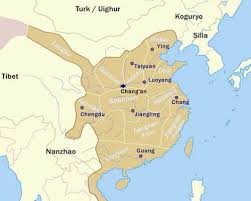
The Tang Dynasty was between 618 and 906 A.D
The Tang Dynasty is considered a golden age of Chinese arts and culture. Tang China attracted an international reputation that spilled out of its cities and, through the practice of Buddhism, spread its culture across much of Asia.
People involved:
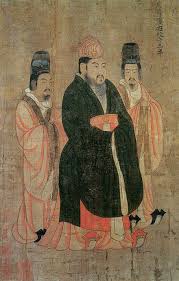
Emperor Gaozu of Han– he helped to lead a revolt that overthrew the Qin Dynasty. He emerged as the leader and established the Han Dynasty.
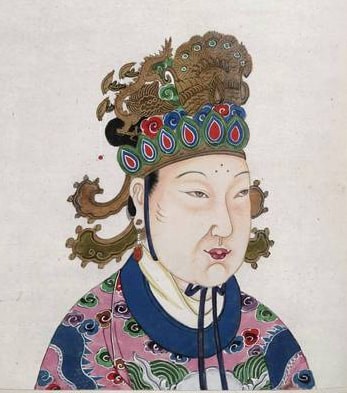
Empress Wu Zetian- was the only female emperor in China’s history. She ruled the Tang Dynasty as empress in the seldom-mentioned Zhou Dynasty.
Emperor Xuanzong of Tang and Wu Zetian– he improved the economy through security on the Silk Road, decreed financial reforms, constructed temples and administrative complexes, built roads, and improved industry. Under Xuanzong’s reign the Tang Dynasty began its golden age.
Du Fu- A famous Realist poet who lived during the Tang Dynasty Era.
History, politics and religion:
- In the beginning of the sixth century A.D, north and south China were divided, but would be united through conquest by the Sui Dynasty, which ruled from 581 to 617 A.D.
- The Tang Dynasty followed an open policy and this attracted many foreign people to this land of art and culture.
- The Tang was also a cosmopolitan dynasty, with people from all over Asia bringing ideas and culture to China- this was the first wave of globalization.
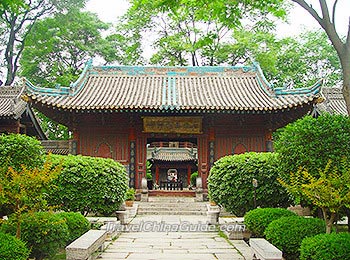
- There were mainly two traditional religions – Buddhism and Daoism.

Culture and Art:
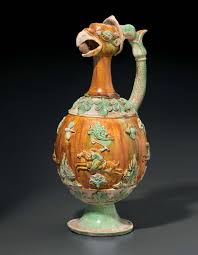
- It was the golden age for poetry and painting, and best known for tricolored glazed pottery and woodblock printing.
- Woodblock printing is credited for helping make Buddhism a regular part of ordinary Chinese life by giving Buddhist monks the opportunity to mass-produce texts.
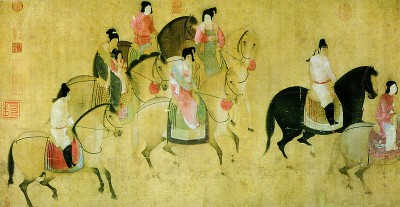
- Xuanzong had a passion for music and horses. To this end he owned a troupe of dancing horses and invited renowned horse painter Han Gan into his court. He also created the Imperial Music Academy, taking advantage of the new international influence on Chinese music.
- The Tang Dynasty is well remembered for the era’s contributions to poetry, partly the result of Xuanzong’s creation of an academy for poets, which helped preserve over 48,900 poems written by well over 2,000 poets of the era.
- The Dynasty contributed a lot to the development of astronomy, medicine and printing technique in Chinese history.
- Tang Poems- a large quantity of excellent poets appeared throughout the whole dynasty.
- Musicians were given importance. The most popular music instruments of the time were bells, zithers, stone chimes (lithophone), flutes, and drums. This was the time when western art forms, music and dance, influenced China from Central Asia. The Tang Dynasty was a prosperous era. Beautiful girls performed Western dances for western songs. This shows the people were open to foreign cultures.
- The Tang Dynasty had its own style of ceramics. Potters developed and introduced new techniques in Tang pottery
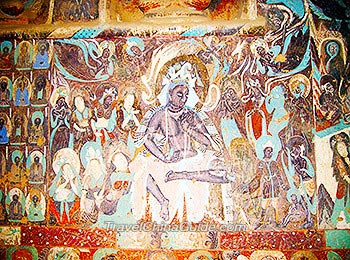
- it is said that more than 40 percent of mural paintings and sculptures in Mogao Caves were created in the Tang Dynasty
Economics:
- Developed the trade network ‘The Silk road’ bringing more resources and sharing cultures- making great deals of money for their economy
- China experienced economic growth under Tang Dynasty.


 Emma Coe Film Studies