The Kuleshov Effect:
- Named after Lev Kuleshov- a soviet film maker from the early 1900’s
- Kuleshov’s experiment proved that ‘a sequence of images conveys more meaning than a single shot therefore when building a film’s narrative editors must consider who the audience will connect multiple images together in their mind’
- Conveys deep emotion through editing
- A director can either create or relieve tension depending on what image they cut to
- A close up of an object or prop can gain increased significance based on how it is edited- this deliberate draws our attention to something and give sit mor importance or opposingly mislead and suppose the audience
- The audience will infer that a sequence of images in a film are happening chronologically and can be powerful when it is revealed it is being told out of order
- Editing is used to achieve the desire response from the audience
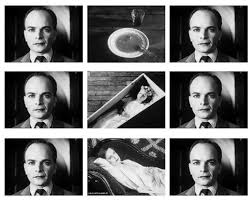
Alfred Hitchcock explains the Kuleshov effect:
‘Pure cinematics’- the assembly of film and how it can be changed to create a different idea.

‘SHAME’ and the Kuleshov Effect:
- If there is no dialogue, there is reliance on editing to emphasise a moment
- Use the Kuleshov effect to pull audiences in
- Editing is used to emphasise the main character’s intentions
- Uses the editing within the scene to fit the narrative emotional context
- By using the Kuleshov effect ‘Shame’ uses the editing to delve into the mind of the character
- This technique allows editors to effectively communicate in a way that words cannot- communicating beyond the limits of language
 Emma Coe Film Studies